

Why the Source Actually Matters
Bottled water marketing leans heavily on words like 'pure,' 'natural,' and 'glacial' — but rarely explains the geology behind them. For Icelandic Glacial Natural Spring Water, the source isn't just a branding choice. It's a specific geological process that shapes what the water contains, how it tastes, and why it has a naturally high pH.
Understanding that process helps you make a more informed decision about what you're drinking, rather than just taking a label's word for it.
Iceland's Volcanic Geology: The Basics
Iceland sits on the Mid-Atlantic Ridge, a tectonic boundary where the Eurasian and North American plates meet. This makes it one of the most volcanically active places on Earth. The island is largely built from basaltic lava rock — a dense, porous material that has been accumulating for millions of years.
When precipitation (rain and snowmelt) falls on Iceland's surface, it doesn't simply run off into rivers. It percolates slowly downward through layers of this lava rock. That journey through porous volcanic stone is what defines lava filtration.
What Lava Filtration Actually Does
The term 'lava filtration' describes a natural process, not a manufacturing step. Here's what happens as water moves through basaltic rock over an extended period:
- Physical filtration: The porous structure of lava rock acts as a mechanical filter, removing particulates as water passes through microscopic channels in the stone.
- Mineral absorption: As water contacts the rock, it picks up naturally occurring minerals — including silica — that are present in basalt. This mineral uptake is gradual and determined by the composition of the rock itself.
- pH elevation: Basaltic rock is alkaline in nature. Water passing through it over time takes on a higher pH. Icelandic Glacial Natural Spring Water has a naturally occurring pH of 8.4, as shown on the bottle label — this comes from the geology, not from additives.
- Isolation from surface contaminants: Because the water travels deep underground through solid rock, it is naturally protected from surface-level pollutants and agricultural runoff.
The result is groundwater that reaches its source spring having been filtered and conditioned by the landscape itself, without industrial intervention in the filtration process.
The Olfus Spring: A Specific Source, Not a General Region
Icelandic Glacial is sourced from the Olfus Spring in Iceland — one of the country's largest natural spring systems. The spring sits near a lava field, and the water that feeds it has been filtering through the volcanic rock for an extended period before emerging.
This matters because 'spring water' has a legal definition in the United States: it must come from an underground formation from which water flows naturally to the surface, or can be collected at the point where it flows to the surface. The source has to be identified and protected. Icelandic Glacial meets that standard, which is why it can be labeled as natural spring water rather than purified or processed water.
What pH 8.4 Means in Practical Terms
A pH of 8.4 places this water on the mildly alkaline side of the scale. The neutral point is 7.0 — most tap water in the United States falls between 6.5 and 8.5 depending on the municipality. Icelandic Glacial sits near the upper end of that range naturally, without any added minerals or alkalizing treatments.
Some people find that slightly alkaline water has a noticeably smooth, clean taste compared to water with a lower pH. Whether that matters to you is a personal preference — but the pH figure on the label is a measurable, verifiable characteristic, not a vague claim.
The 30 x 330ml Format: Why It Makes Sense for This Product
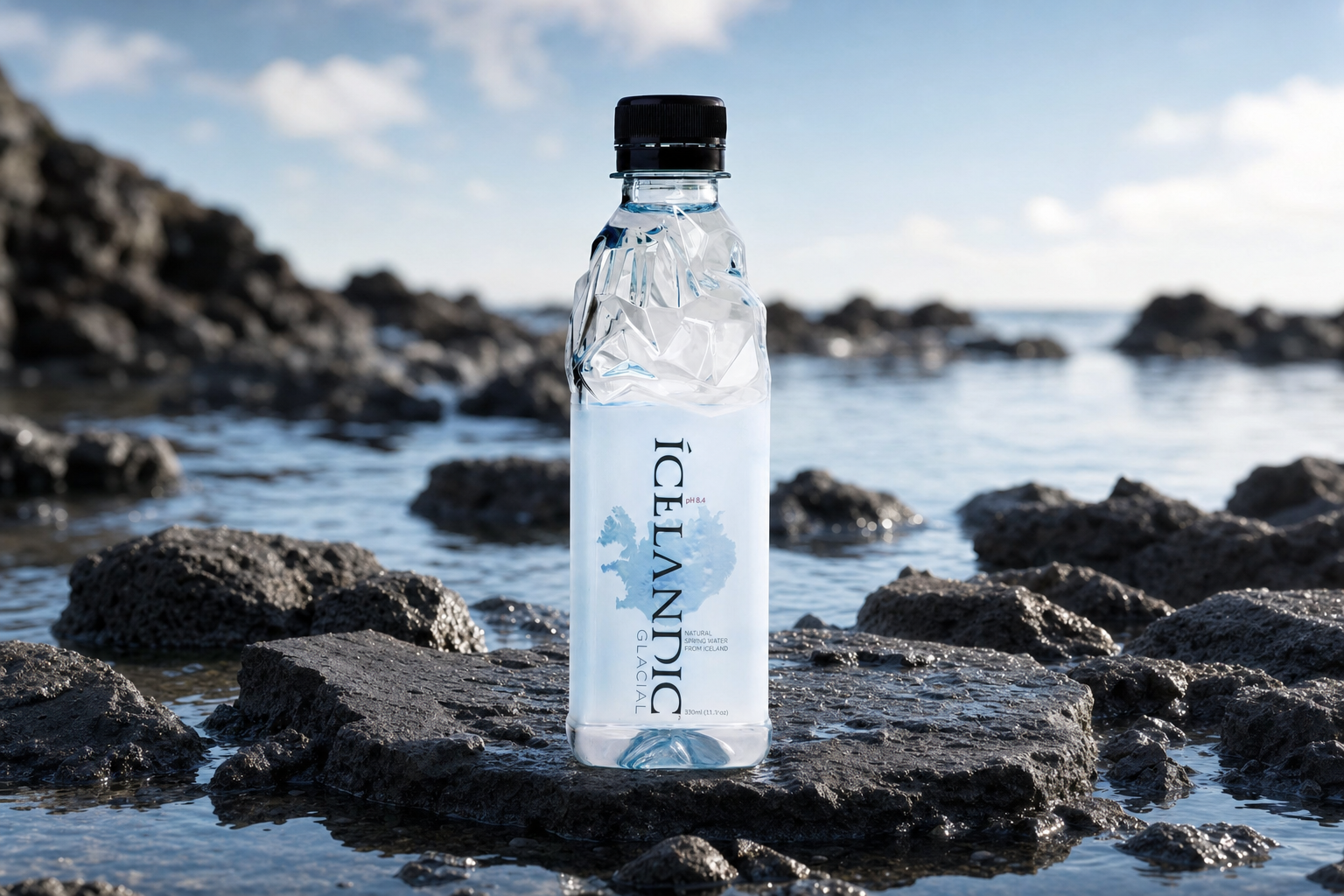
Icelandic Glacial's 330ml bottle is a compact, single-serve size — 11.1 fl oz. It's enough for a full serving without the bulk of a larger bottle, which makes it practical for desk use, gym bags, packed lunches, and office fridges. The clear bottle with its faceted texture and black cap keeps the product recognizable and easy to grab.
The 30-pack case format is worth thinking about from a practical standpoint. Spring water from a specific international source isn't something you restock weekly at a corner store. Ordering in a case means you have a consistent supply on hand without repeated trips or orders. If you're already thinking about what household staples are worth buying in bulk, bottled water from a fixed, quality source fits that category well.
How This Fits Into a Thoughtful Hydration Routine
Hydration is one of the few nutritional habits that affects nearly every system in the body — digestion, energy, cognition, and more. If you're already paying attention to what you eat, the quality of what you drink is a logical extension of that. For readers thinking about gut health and dietary choices, consistent hydration with clean water is a foundational step.
Icelandic Glacial isn't positioned as a health supplement or a functional drink — it's spring water. But the process behind it means you're getting water that has been naturally filtered and conditioned, with a pH and mineral profile shaped by one of the world's most distinctive geological environments.
Reading the Label Honestly
The Icelandic Glacial bottle label states: 'Natural Spring Water from Iceland' and lists pH 8.4. These are factual, measurable claims tied to the product's source and composition. If you're in the habit of reading labels carefully before buying food and drink products, that kind of specificity is worth noting — it tells you something concrete about what's in the bottle rather than relying on imagery alone.
Order Icelandic Glacial Natural Spring Water
Shop Icelandic Glacial Natural Spring Water at Groceryeshop — delivered to your door in a 30-pack case of 330ml bottles. Stock your home, office, or gym supply without the hassle of carrying cases from a store. Visit hotgroceryeshopdeals.com to place your order.
Frequently Asked Questions
What makes Icelandic Glacial a natural spring water?
Icelandic Glacial is sourced from the Olfus Spring in Iceland, an underground spring formation where water flows naturally to the surface after filtering through volcanic lava rock. In the United States, 'natural spring water' is a regulated term — the source must be identified and the water must meet specific collection standards, which Icelandic Glacial does.
Why does Icelandic Glacial have a pH of 8.4?
The pH of 8.4 comes from the water's natural contact with basaltic lava rock as it filters underground. Basalt is alkaline, and as water passes through it over time, it takes on a higher pH. No alkalizing additives are used — the pH is a result of the geology.
How many bottles come in a case of Icelandic Glacial 330ml?
Each case contains 30 individual bottles, each 330ml (11.1 fl oz). This is a single-serve size suitable for everyday use, and the 30-pack format is designed for home or office stocking.
Is lava filtration an industrial process or a natural one?
Lava filtration is entirely natural. It refers to the process by which groundwater percolates through layers of porous volcanic basalt rock over time, picking up minerals and being physically filtered by the rock's structure. It is not a manufacturing or treatment step — it happens in the ground before the water ever reaches the spring.